GET WHAT YOU NEED
Individual Courses
$10most 1-hour courses
- Choose any course in the library
- Self-paced, on-demand access
- Certificate for every course completed
- Perfect when one topic is calling your name

✦ PROFESSIONAL DEVELOPMENT FOR BEHAVIOR TECHNICIANS
Continuing education that actually continues your education. Built for behavior technicians doing the real work—in clinics, schools, homes, and the community.
THE REQUIREMENT IS THE FLOOR
Checking a box isn’t the same as growing.Twelve PDUs every two years may meet the requirement. It should not be the ceiling.
TWO WAYS TO KEEP GROWING
Need one specific skill right now? Grab the course. Want the full library—and a new reason to come back every month? The membership is where the value lives.
GET WHAT YOU NEED
FULL-LIBRARY ACCESS
Purchasing for a team? Visit the Agency Training Hub →
LEARNER-REPORTED RESULTS
We want you to finish a training today and apply what you learned in your session tomorrow. Real strategies, clearer judgment, and practical skills—not another certificate sitting in your downloads folder.
Likely or very likely to apply what they learned with current clients
Based on 58 learner course reviews collected in 2026.BEHAVIOR TECHNICIAN PROFESSIONAL DEVELOPMENT
Every course is available individually. Or unlock the whole lineup—and each new monthly drop—with the Annual Membership.
Real ABA skills. Memorable scenarios. Built for the work you actually do.

DATA COLLECTION
Collect cleaner, more useful session data without turning the end of every session into a guessing game.

STIMMING BEHAVIOR
Understand repetitive behavior through an ABA lens and respond without automatically treating every stim as a problem.

PUBLIC MELTDOWNS
Handle public behavior and unwanted attention while keeping your client’s dignity, safety, and needs at the center.

CONFIDENTIALITY
Protect client privacy and professional boundaries across social media, group chats, photos, and everyday conversations.

DE-ESCALATION
Recognize escalation early and respond with calm, ethical strategies that protect safety without increasing the pressure.
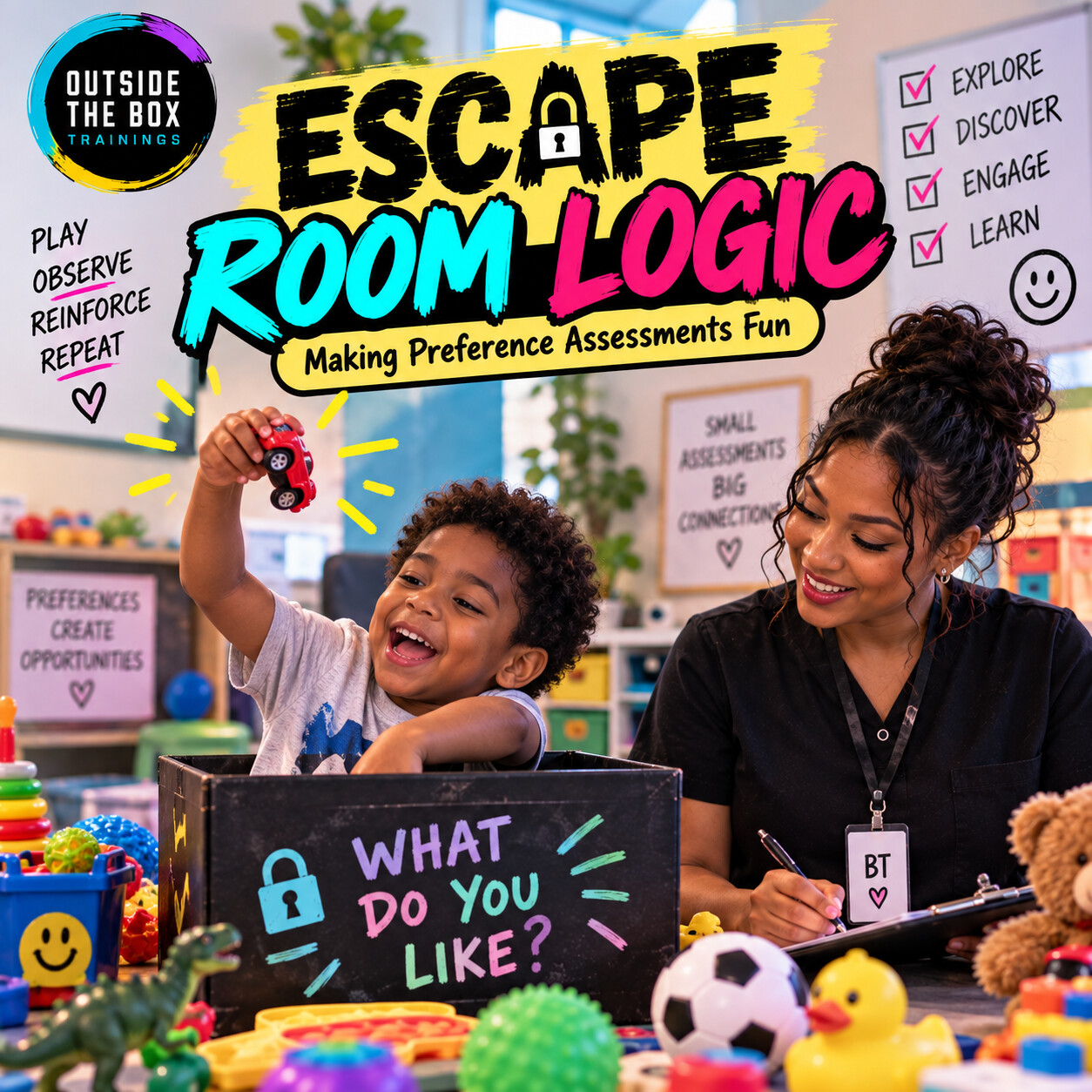
PREFERENCE ASSESSMENTS
Use observation, choice, and ongoing assessment to find reinforcers that actually matter to the learner in front of you.

SESSION DOCUMENTATION
Write objective session notes that describe what happened, support continuity of care, and stand up to review.

TASK ANALYSIS & CHAINING
Turn complex skills into teachable steps using task analysis, prompting, and reinforcement—without the kitchen drama.

ENVIRONMENTAL MODIFICATIONS
Stay organized and behavior-focused when the environment around your client becomes loud, busy, and unpredictable.

DISCRETE TRIAL TEACHING
Keep discrete-trial teaching structured and clinically sound without making every session feel repetitive or robotic.
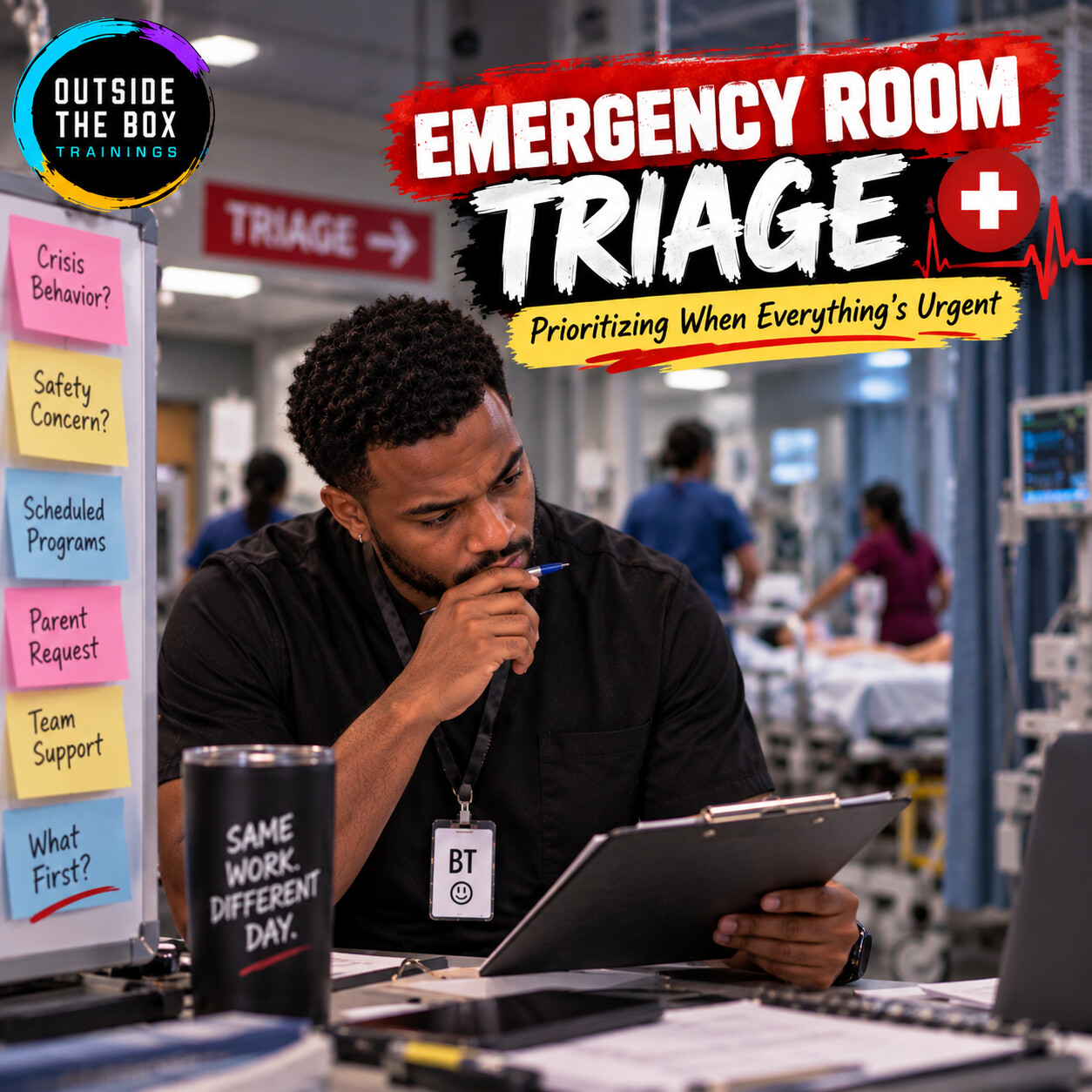
CLINICAL PRIORITIZATION
Build a practical decision-making process for busy sessions when several needs compete for your attention at once.
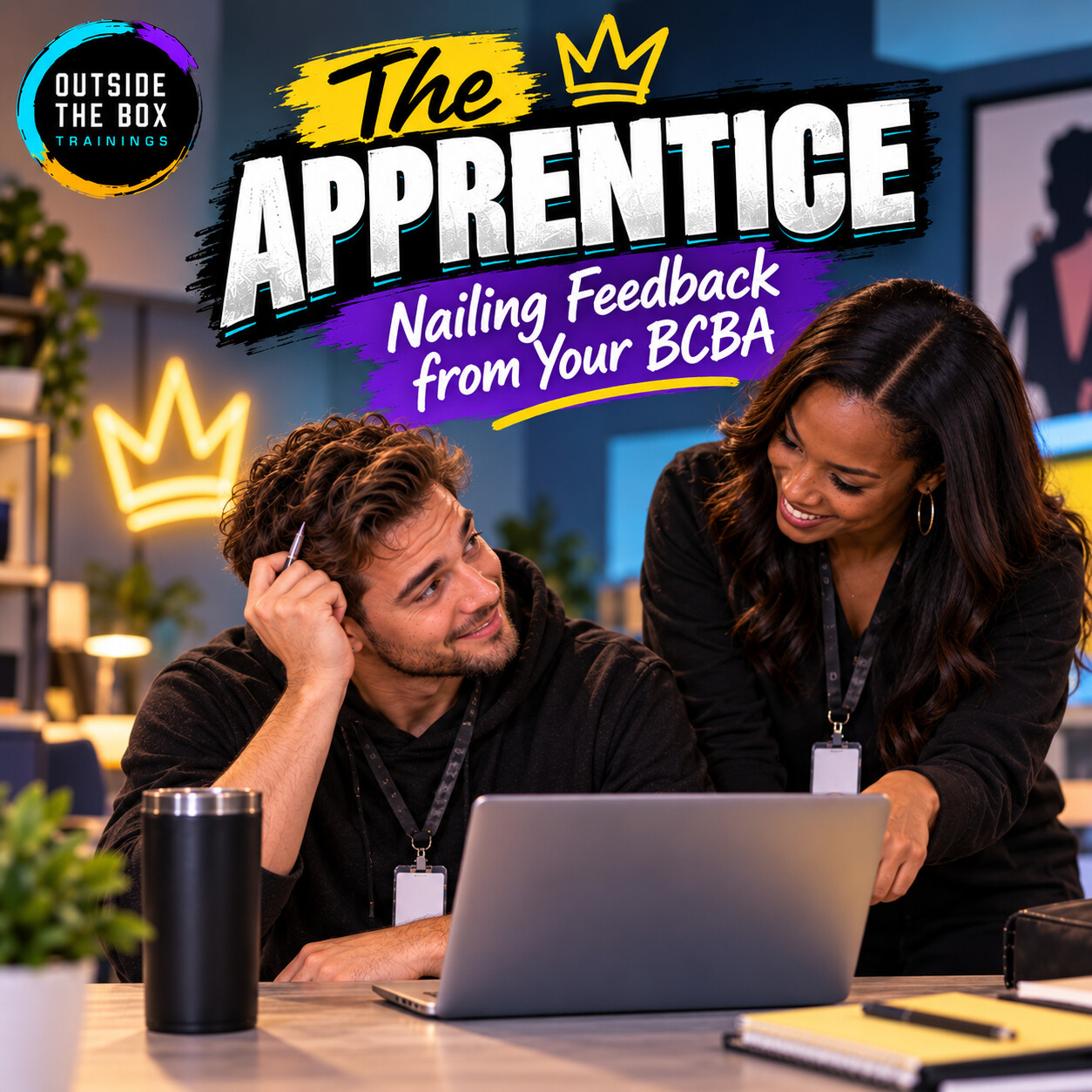
SUPERVISION & FEEDBACK
Receive clinical feedback without getting defensive, shutting down, or missing the opportunity to grow.
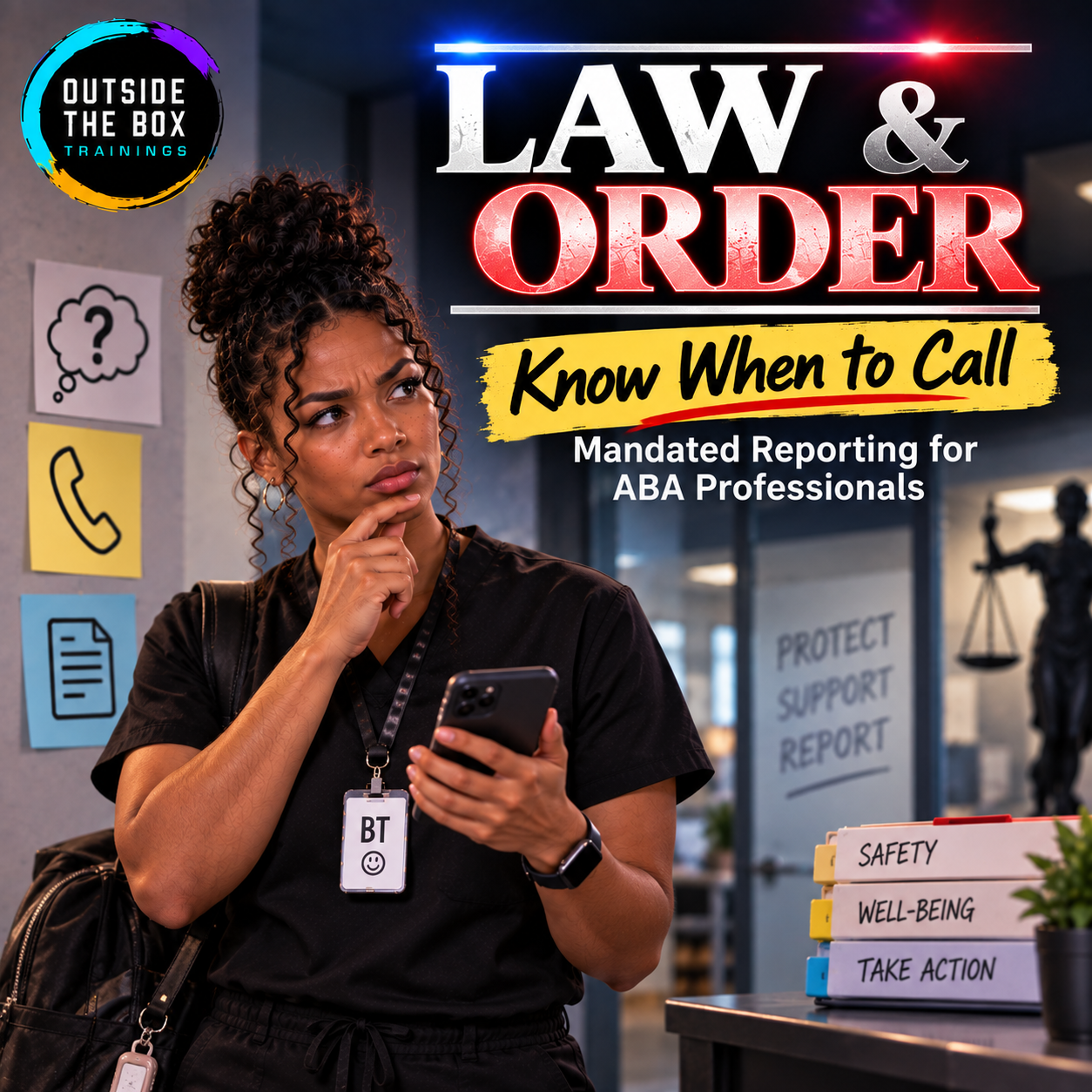
MANDATED REPORTING
For BTs, RBTs, BCBAs, supervisors, administrative staff, and others working in ABA services. Know what to observe, document, and report when abuse, neglect, or exploitation concerns arise.

INSTRUCTIONAL CONTROL
Build a stronger therapeutic presence through preparation, follow-through, pairing, and reinforced cooperation.
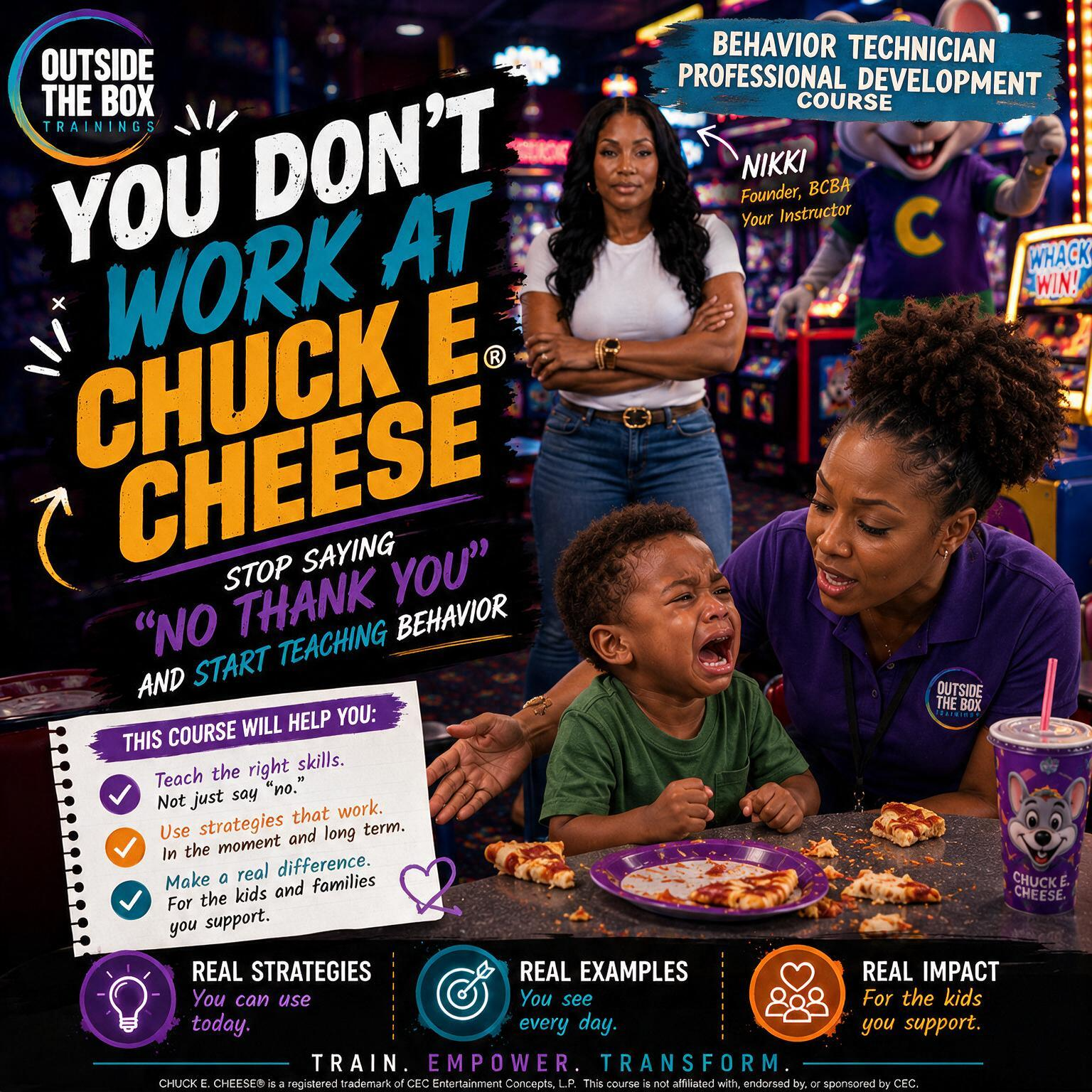
TEACHING EXPECTATIONS
Replace vague correction language with clear instructions, teachable expectations, and consequences that make sense.
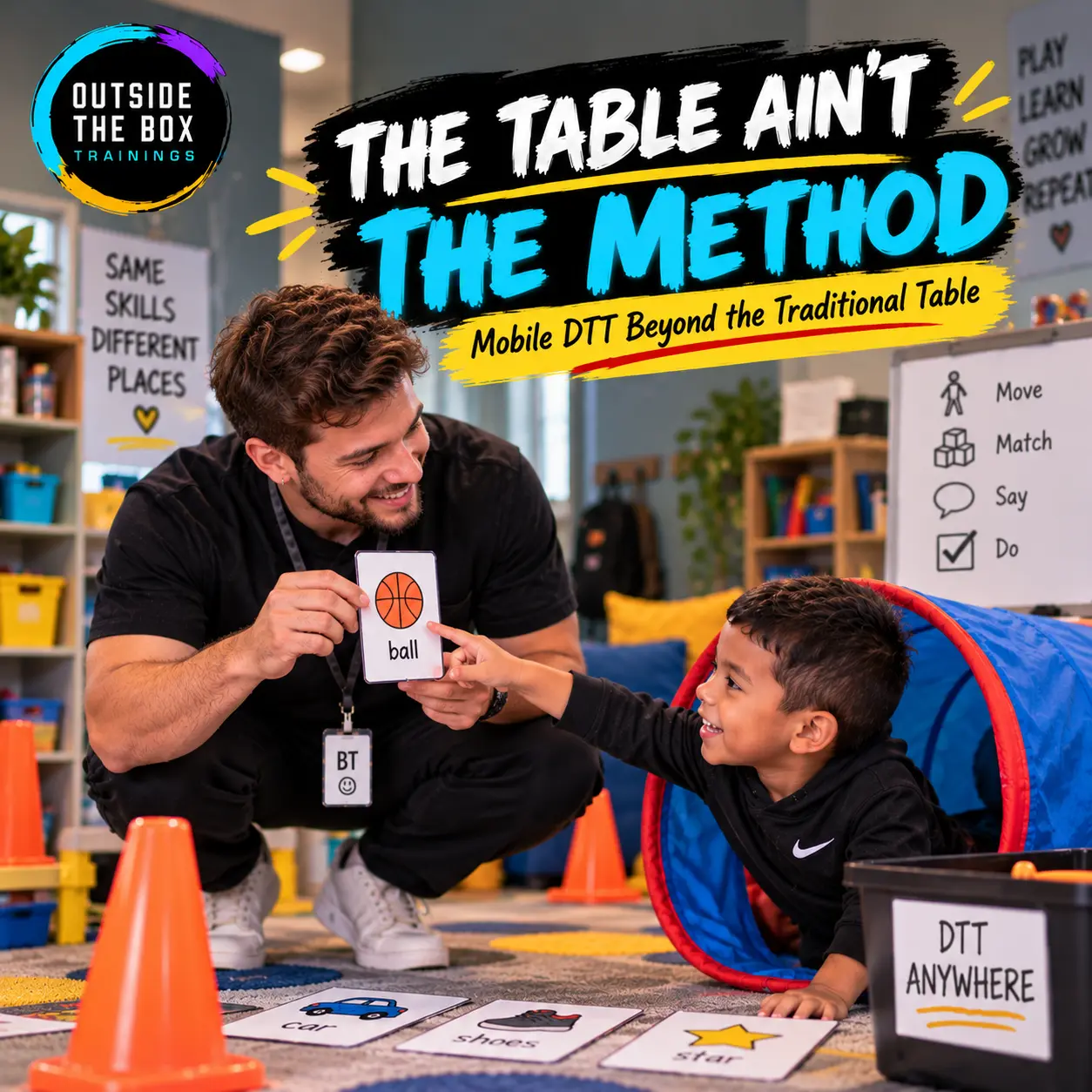
DISCRETE TRIAL TEACHING
Keep discrete trial teaching structured and consistent while moving instruction beyond the table and into the environments where clients actually learn.