← Back to OTB Learning Group

SPECIALIZED WORKFORCE COHORTS

A New Career Can Start Inside the Program You Already Run.

One cohort can change what comes next.

OTB partners with schools, colleges, nonprofits, employers, transition programs, workforce organizations, and other community-serving organizations to deliver dedicated behavior technician workforce cohorts.

Your organization identifies eligible adults interested in behavior support, education, psychology, behavioral health, human services, working with children or adults, or entering another helping profession. OTB builds the structured training and credential-preparation experience around your participants, schedule, support needs, and workforce goals.

Each cohort includes self-paced access to our 40-hour behavior technician training, The Behavior Technician Mixtape: 40 Hours to Certification, live BCBA-led instruction twice each week, practical application through OTB Practice Studio’s interactive ABA simulations, competency-assessment preparation and administration for eligible participants, Mic Check mock exams and exam preparation, credential-application guidance, and career-readiness support.

OTB also provides the OTB-issued training and assessment documentation earned by each participant, including the 40-hour training certificate, applicable attestations, and completed competency-assessment documentation.

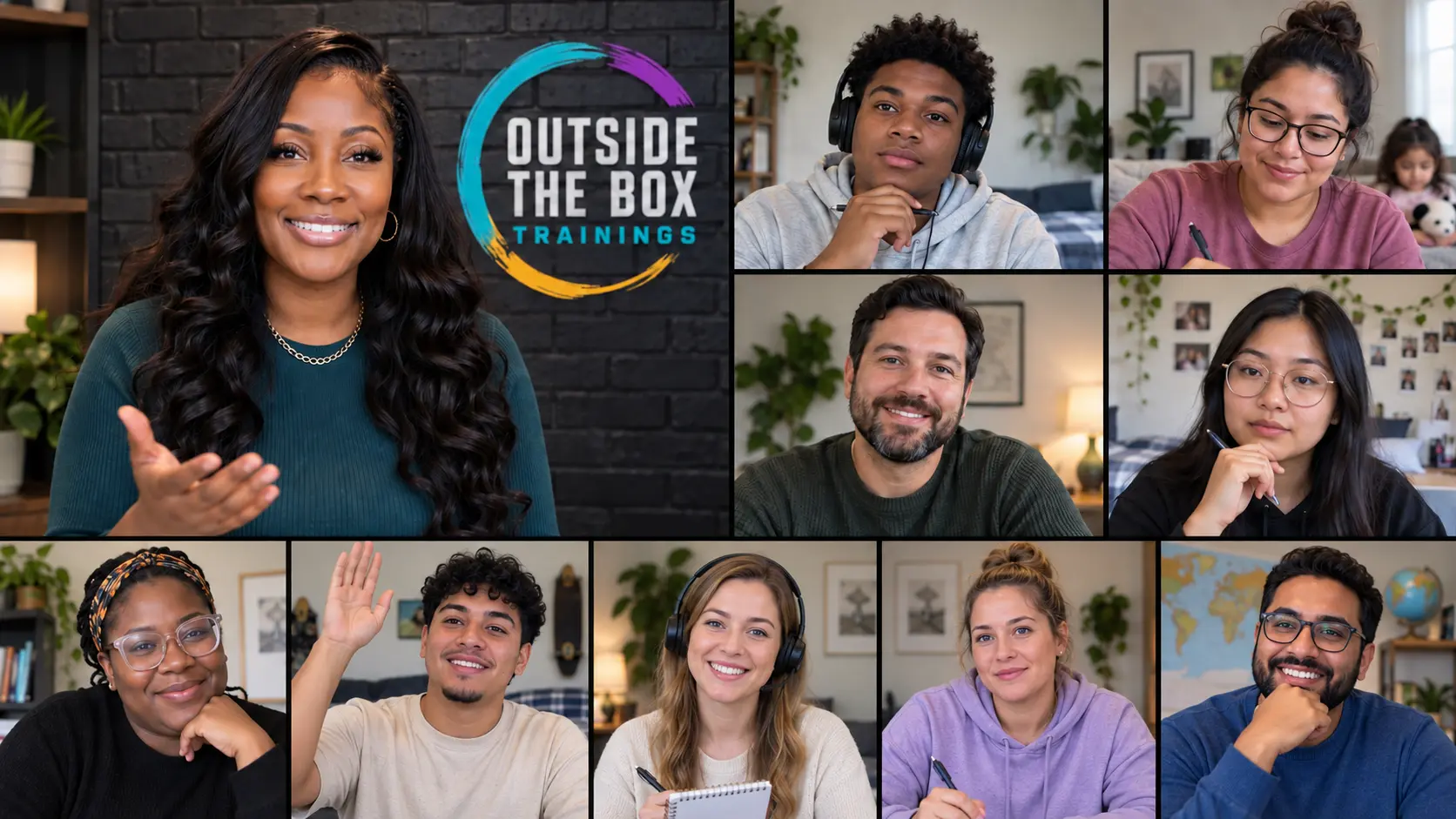
BCBA TRAINERSTUDENT ANALYST
LIVE ZOOM COHORT
A BCBA trainer and student analyst co-facilitating a live virtual behavior technician workforce cohort.

NEW TO ABA?

What Are Applied Behavior Analysis and the RBT Role?

Applied Behavior Analysis—commonly called ABA—is the science of understanding how people learn and how the environment influences behavior. ABA professionals use observable information, individualized strategies, and data to teach useful skills, strengthen independence, support communication, and help people participate more successfully at home, at school, at work, and in the community.

WHAT IS APPLIED BEHAVIOR ANALYSIS?

ABA turns information about learning and behavior into practical action. Instead of relying on assumptions, professionals observe what is happening, identify skills that need support, follow individualized plans, measure progress, and adjust strategies based on what the data show.

WHAT IS A REGISTERED BEHAVIOR TECHNICIAN?

A Registered Behavior Technician®, or RBT®, is a paraprofessional who provides applied behavior analysis services under ongoing supervision. Depending on the setting and position, an RBT may help individuals build communication, social, daily-living, academic, employment, and independence skills while following plans developed by qualified supervisors and documenting progress.

RBT® is one nationally recognized behavior-technician credential. OTB training may also support ABAT® and IBT® pathways depending on participant location, eligibility, and the requirements of the applicable credentialing organization.

Completion of an OTB training program does not by itself guarantee credential approval, examination passage, employment, or eligibility in every location. Participants must meet all current requirements established by the applicable credentialing organization, employer, state, and payer.

ONE COHORT. ONE PARTICIPANT’S STORY.

Picture What One Cohort Can Change.

Maya participating in a virtual workforce cohort from home with a schedule, notebook, and coordinated support nearby.
Identified by her program

Imagine Maya.

She is 19, has her high school diploma, and is preparing to transition out of foster care. She wants stability, meaningful work, and a realistic path toward financial independence—but she is not sure where to begin. A four-year degree is not her immediate plan, and another general job-readiness workshop will not give her the career direction she needs.

The transition program partners with OTB to create a specialized workforce cohort for a group of eligible young adults preparing for their next step. The program recruits participants who are at least 18, have a high school diploma or equivalent, and are interested in behavior support, education, psychology, behavioral health, human services, or another helping profession.

Maya is one of the participants selected to join that cohort.

She is interested in psychology, behavior, working with children, and entering a helping profession. Alongside the other members of her cohort, she now has an opportunity to explore that interest through a structured path toward behavior technician certification.

Supported through the cohort

Maya begins the cohort alongside the other participants selected by her transition program with a clear schedule, shared milestones, structured deadlines, and people available to help her keep moving. She completes The Behavior Technician Mixtape: 40 Hours to Certification through self-paced coursework while progressing alongside the rest of her cohort.

Twice each week, she attends live instruction led by a BCBA and supported by a student analyst or cohort facilitator working under BCBA direction. She can ask questions during live sessions, facilitator check-ins, and scheduled Lunch & Learn support meetups instead of falling behind in silence.

Through the organization’s coordinator dashboard, Maya’s transition coordinator can review her training progress and completed milestones directly. If Maya stops progressing or misses an expected milestone, the coordinator can conduct a timely check-in and help address outside barriers, resources, or case-management needs.

Inside OTB Practice Studio, Maya moves beyond memorizing terminology. She practices reading and following behavior plans, collecting different types of data, managing multiple responsibilities during a session, and responding to realistic situations based on written clinical directions.

Assessed and prepared by OTB

After Maya meets the applicable cohort and eligibility requirements, OTB administers her competency assessment. She also prepares for the national examination through direct exam-preparation support and our Mic Check mock-exam system.

When she successfully completes each required component, OTB provides the documentation she earned through the program, including her 40-hour training certificate, applicable OTB attestations, and completed competency-assessment documentation.

OTB then works alongside Maya and her transition coordinator to make the remaining application and examination steps easier to understand. OTB explains the training, assessment, and exam-related steps, while her transition coordinator continues providing individualized support, helping her address barriers, gather personal documentation, meet deadlines, and follow through.

Ready to pursue certification and employment

The goal is not to leave Maya with only a course-completion certificate. The goal is to help an eligible participant move through a supported process—from training and realistic practice to competency assessment, exam preparation, and the opportunity to earn a national behavior technician credential.

After passing the applicable examination and receiving approval from the credentialing organization, Maya has a professional credential she can carry into future job searches across the country, subject to state, employer, and payer requirements.

Employment is never guaranteed. But Maya now has something concrete: documented training, demonstrated competency, exam preparation, continued professional-development support, and a clear entry point into a helping profession.
The program was already supporting her. The specialized cohort gave that support somewhere to lead.

Maya is a fictional example representing one participant’s possible experience within a larger organization-based workforce cohort. OTB does not create specialized cohorts for individual participants. Eligibility, assessment completion, credential approval, examination results, and employment outcomes are not guaranteed.

HOW THE PARTNERSHIP WORKS

We Don’t Drop a Course Into Your Program. We Build the Cohort With You.

Before the cohort begins, OTB works with your organization to define who the program is intended to serve, how participants will be selected, when live instruction will take place, what additional support may be needed, and how progress will be shared.

01

IDENTIFY THE RIGHT PARTICIPANTS

Your organization identifies eligible adults who are interested in behavior support, education, psychology, behavioral health, human services, or another helping profession.

Participants should be at least 18 years old, have a high school diploma or equivalent, and be prepared to participate consistently throughout the cohort.

The partner organization handles participant recruitment and may coordinate or fund any required background screening or other support services.

02

DESIGN THE COHORT

OTB and your organization establish the cohort size, schedule, live-instruction times, completion expectations, support plan, workforce goals, and designated coordinator who will receive dashboard access for the organization’s enrolled participants.

The cohort is built around the needs of your program and participants without changing the requirements of the applicable behavior technician training or credential.

03

DELIVER TRAINING WITH SUPPORT

OTB provides the self-paced 40-hour training, twice-weekly live instruction, cohort facilitation, Lunch & Learn support meetups, OTB Practice Studio activities, progress monitoring, structured deadlines, and direct participant support.

The organization’s designated coordinator can monitor participant progress through the coordinator dashboard and conduct additional check-ins when needed.

04

MOVE FROM TRAINING TO THE EXAM

After eligible participants meet the applicable program requirements, OTB administers the competency assessment, provides Mic Check mock exams and exam preparation, and issues the OTB training and assessment documentation each participant earns.

OTB explains the training, assessment, application, and examination steps while working alongside the participant and the organization’s designated coordinator. The participant remains responsible for meeting credentialing requirements, submitting the application, and passing the applicable examination.

Your organization remains connected to its participants. OTB provides the training structure, clinical instruction, assessment, and exam preparation that move the cohort forward.

PARTNER VISIBILITY

You Build the Opportunity. We Make the Progress Visible.

Your organization does not have to wait for an end-of-cohort report. A designated transition coordinator, program coordinator, or other organizational representative receives dedicated coordinator dashboard access through OTB’s learning-management system. From one dashboard, the coordinator can review each participant’s course activity, training progress, completed milestones, and overall completion status—making it easier to conduct timely check-ins and provide support when someone begins falling behind.

DIRECT COHORT ACCESS

  • View the organization’s participant roster
  • Review individual participant progress
  • Monitor course activity and completion status
  • See completed and outstanding training milestones

TIMELY PARTICIPANT SUPPORT

  • Identify missed milestones
  • Conduct the organization’s own participant check-ins
  • Reconnect with participants who stop progressing
  • Address personal, logistical, or case-management barriers

OTB PARTNERSHIP UPDATES

  • Live-session attendance updates
  • Competency-assessment status
  • Exam-preparation progress
  • Cohort summaries and recommended next steps

Coordinator dashboard access is limited to participants enrolled through the partner organization. It does not provide access to unrelated OTB learners or administrative areas of the learning-management system.

Progress should not be a surprise at the end. The strongest cohorts respond while participants are still in the program.

READY TO EXPLORE A COHORT?

Let’s See What This Could Look Like for Your Program.

Tell us who your organization serves, the number of participants you are considering, and the workforce outcome you want to create. We’ll help you determine whether a specialized workforce cohort is the right fit.

DISCUSS A SPECIALIZED COHORT